Piano Magic Notes 7 Music Game
- 4.6
- Rating
- 1.00M
- Installs
- Free
- Price

 Analysis by App-foxy
I went into Piano Party: Music Tiles Game expecting a simple reflex game, and that is exactly where its appeal begins. It does not ask me to learn a complicated rule set before I can enjoy a song. I tap the moving music tiles, try to stay with the beat, and gradually settle into the small concentration loop that makes this kind of game so easy to pick up. The presentation is cute and welcoming, while the underlying challenge depends on timing rather than long explanations.
That balance makes it a comfortable choice for short sessions. I can play when I have a few spare minutes, but the rhythm also gives each attempt a clear purpose: listen, react, recover from a missed tile, and try to keep the sequence going. It is a free music game from BeatBite Studio: Rhythm x Music, aimed at Everyone and available for devices running Android 7.0 or later. The current version is 1.4.0, and its broad reach is reflected in more than a million installs.
My first impression is positive, although it comes with an important qualification. This is not trying to replace a full piano-learning tool, a deep rhythm simulator, or a large music service. Its strength is immediacy. I can open it without preparing anything, understand the basic interaction almost instantly, and get a light musical challenge without committing to a long play session. If that sounds like the kind of game you want, its simple design works in its favor.
You May Also Like

 Blood Strike: 2.5 Anniversary
Blood Strike’s Loadouts Turn Every Drop Into a Tactical Gamble
A close look at Blood Strike’s custom loadouts: how fast access to signature weapons reshapes its battle royale rhythm, rewards preparation, and narrows the gap between fights.

 Pandora - Music & Podcasts
Pandora’s Music Is Easy to Start, but Harder to Recover
Pandora’s strength is its low-effort path from a seed to a station. Its weak spot is how much confidence it asks you to place in connection, setup, and quiet recovery.

 8 Ball Pool
 Is Built on Rivalries, Rematches, and Routine
A close look at the rivalries, rematches, shared routines, and unanswered safety questions that turn a quick pool match into a persistent mobile community.

 Samsung Music
’s Quiet Strength Is Playing What You Already Own
Its reach comes less from spectacle than from dependable access to a personal library. That simplicity is both the app’s strongest retention engine and its ceiling.

 AccuWeather: Weather Radar
AccuWeather Review: A Quick, Clear Forecast for Everyday Decisions
For everyday plans, the best forecast is the one you can understand quickly. AccuWeather makes rain timing, radar, and local conditions easy to act on, with a few trade-offs.

 Hill Climb Racing
Why Hill Climb Racing Still Turns Crashes Into One More Run
A tiny car, a bumpy hill and one more upgrade: Hill Climb Racing keeps resurfacing because its simple chaos makes every near-miss feel personal.
More From Our News Desk



A cheerful visual language that supports the play
The art direction is built around a soft, playful mood rather than realism. That choice matters because the game’s visual identity needs to do two jobs at once: make the screen pleasant to look at and keep the active tiles easy to follow. A busy or overly dramatic presentation would work against the timing challenge. Here, the cute style gives the experience a friendly surface, so the pressure of keeping up with the notes never feels too severe.
I also like the way the setting stays subordinate to the interaction. The game’s identity comes through its music-themed presentation, but it does not bury the playable area under decorative detail. When I am focused on a sequence, the most important information remains the tile movement and the rhythm behind it. That is a small but meaningful design success: the visual world creates personality without demanding attention at the wrong moment.
The result is a game that feels approachable for younger players and casual users who may avoid more intense rhythm titles. The Everyone rating fits that welcoming tone. It also makes the game suitable for a shared family device, provided the person playing is comfortable with quick taps and understands that the challenge can become more demanding as concentration slips.
There is a trade-off in this kind of visual simplicity. Players who want a strong narrative setting, detailed characters, or a sense of musical progression through a larger fictional world may find the presentation lightweight. I did not come away feeling that the art was meant to tell a complex story. Instead, it establishes a consistent mood: bright, cute, and uncomplicated. For a quick piano-tile game, that is a sensible priority.
One useful habit is to treat the visual style as a focus aid rather than just decoration. When I play, I try not to chase every movement with my eyes independently. I let the tile path sit in my peripheral vision and use the sound as a second timing reference. The gentle presentation makes that easier than it would be in a visually crowded rhythm game. This is especially helpful during a first session, when learning to coordinate sight and hearing is more important than chasing a perfect run.
How the setting changes the feel of a short session
The game creates a pleasant contrast between a relaxed appearance and a task that still demands attention. That contrast is one of its better qualities. I can begin with the expectation of a casual break, then find myself concentrating more seriously once the pattern becomes less comfortable. The mood stays light even when my timing is not perfect, which makes mistakes feel like part of the loop instead of a reason to quit immediately.
This is also why I would recommend it for small gaps in the day. Imagine waiting for a friend, sitting through a short commute, or taking a break between chores. A long role-playing game would be inconvenient, while a competitive online match might require too much commitment. A tile-based music game fits that space well because the activity has a clear beginning and end, and the player can return to it without remembering a complicated story or inventory.
Still, the same short-session design may feel limited if you want a game that gives you a reason to play for hours. The atmosphere is effective in brief doses, but it is not the main attraction for someone looking for exploration or a detailed progression system. I see the setting as a frame around the rhythm rather than a destination of its own.
Sound does more than decorate the tapping
The music is central to the experience because it gives the taps their meaning. Without a convincing connection between what I hear and what I do, the game would become a visual reaction test with piano imagery. The presence of fun piano songs and beats helps turn each sequence into something I can feel as well as watch. Even when I am not playing perfectly, the audio keeps the session connected to the musical idea.
I found it more useful to listen for the pulse of a passage than to focus on every individual note. That approach reduces the feeling of chasing the tiles and gives the play a steadier rhythm. When I concentrate only on the screen, a short distraction can throw me off. When I use the beat as a guide, I recover more naturally. This is one of the most practical lessons the game offers: the audio is not background decoration; it is part of the information needed to play well.
For that reason, the best place to play is not always the brightest or most visually comfortable one. A noisy room can make timing harder, especially if I am relying on the music to anticipate the next action. I get more from the game when the sound is clear enough to distinguish the beat from surrounding noise. I would not describe this as a substitute for formal musical practice, but it does encourage a basic awareness of tempo and timing.
The piano focus also gives the game a recognizable personality. Compared with a rhythm game built around electronic effects or a large variety of unrelated genres, this one feels more unified. The sound and the cute visual design point in the same direction. That coherence is important: the game does not feel as though a generic tapping system was placed inside a random theme. Its musical framing is present in the way I approach each attempt.
There is a limitation for listeners who want a very broad music library or a more personal listening experience. A focused piano-game identity will not satisfy someone who mainly wants to play along with favorite artists, import tracks, or practice a particular composition. In that situation, a dedicated music-learning app or a rhythm game built around a larger licensed catalog would be a better fit. I would choose this game for immediate, self-contained play rather than for music discovery.
Using rhythm instead of panic
My most useful adjustment was slowing down mentally even when the tile sequence felt fast. Tapping in a panic creates a chain of small errors: I look too far ahead, miss the current tile, and then lose the beat while trying to recover. Keeping a steady internal count works better. I also found it helpful to take a short pause between attempts instead of instantly repeating the same mistake. A few seconds of reset can make the next run feel more deliberate.
This makes the game surprisingly suitable for players who enjoy improving coordination without wanting a formal training mode. The challenge is immediate and visible through the play itself. I can notice whether I am reacting late, watching the wrong part of the screen, or allowing one mistake to disrupt the rest of the sequence. Those observations are more valuable than simply tapping faster.
On the other hand, anyone with difficulty responding to quick visual movement may find the core interaction tiring. The game’s friendly appearance should not be mistaken for a completely effortless experience. Rhythm games still require sustained attention, and the enjoyment depends on whether the player likes repeating a sequence to improve timing. If you prefer turn-based puzzles or slower music activities, this may not be the right choice.
Why the mechanics fit the mood
The main mechanic is easy to understand: I tap the music tiles in time with the song and beats. That simplicity is a strong match for the art and sound. A complicated control scheme would make the cute, accessible presentation feel misleading. Instead, the game lets me move from curiosity to actual play with almost no barrier. The design communicates its purpose quickly, which is exactly what I want from a casual mobile game.
The important detail is that simple controls do not mean the experience is automatically shallow. Timing creates its own kind of difficulty. I have to decide whether to follow the tile visually, listen for the beat, or combine both signals. The better approach is to combine them, because each one covers a weakness in the other. If the screen becomes difficult to track, the music can restore my timing; if the sound is interrupted, the visual movement can still help me continue.
This also explains why the game works for different levels of commitment. A newcomer can enjoy the basic tapping without thinking too much about technique. A more practiced player can focus on consistency, cleaner reactions, and maintaining concentration through a longer sequence. The same rule set supports both casual play and personal improvement, even though it does not offer the depth of a specialist rhythm simulator.
My main friction point is the possibility of repetition. A game built around tapping tiles naturally depends on the appeal of its songs and the satisfaction of improving. If those two elements stop feeling fresh, there is not much else to pull me forward. I would not install this expecting a story campaign or a broad collection of unrelated activities. Its replay value comes from the rhythm loop itself, so the player needs to enjoy that loop.
Another trade-off is precision versus accessibility. A very forgiving rhythm game can welcome beginners, but it may not satisfy players who want strict performance demands. A highly exacting one can reward mastery, but it can also discourage anyone who only wants a relaxing break. Piano Party sits most comfortably in the casual middle ground. I see it as a game for practicing attention and enjoying musical feedback, not as a competitive instrument for measuring expert-level timing.
Where it fits beside other music games
Compared with a piano-learning app, this game is much easier to approach but much less educational in a formal sense. I would not use it to learn finger placement, read sheet music, understand chords, or build a structured practice routine. Its value is in rhythm and reaction. It gives me a playful connection to piano-style music without asking me to study an instrument.
Compared with a larger rhythm game, it feels more focused and less demanding in terms of setup. There is an advantage in that clarity: I know what I am doing as soon as the session begins. The downside is that players who want deep customization, a huge song ecosystem, or elaborate competitive systems may find it too narrow. Those alternatives are better when the surrounding content matters as much as the tapping.
It also differs from ordinary casual puzzle games because the correct action is tied to sound and timing rather than only to visual logic. That makes it a good choice for someone who likes music but does not necessarily want a traditional puzzle board. However, it is less suitable when I want to play with the sound off or while multitasking. The audio relationship is too important for me to treat it as a silent background game.
A practical way to decide is to ask what kind of satisfaction you want. If you want a quick musical challenge with a cute atmosphere, this game is a sensible pick. If you want lessons, a story, social competition, or highly technical rhythm mastery, I would look elsewhere. The game is strongest when its modest scope is treated as a benefit rather than a missing feature.
Who will enjoy it, and who should skip it
I would recommend it to casual players who like music-based interactions, short repeatable sessions, and games that explain themselves through play. It is also a reasonable choice for families looking for an approachable title with an Everyone content rating. The free price removes the need to make a large commitment before discovering whether the tapping rhythm suits you.
It may appeal to someone who wants a small focus exercise during a break. I sometimes enjoy games like this because they give my attention one clear job. For a few minutes, I am not sorting messages or switching between tasks; I am listening, watching, and responding. That does not make it a productivity tool, but it can provide a more active break than passively scrolling through a feed.
I would skip it if I needed a serious piano-training companion. I would also skip it if my main reason for playing music games was access to specific commercial songs or a deep competitive ranking environment. The game’s charm comes from its own compact rhythm world, not from trying to cover every possible music-game preference.
Device compatibility is broad enough for older Android users because the minimum requirement is Android 7.0. Even so, the actual comfort of play depends on the screen and the environment. A small display, distracting background noise, or delayed audio can make a timing game feel less fair. I would test a short session in the place where I expect to use it most, then decide whether the visual and musical cues feel comfortable together.
Small habits that make the experience better
First, I recommend playing with a stable grip and keeping the tapping finger relaxed. Tension makes quick corrections clumsy, especially when a sequence changes pace. Second, I would avoid treating every missed tile as a disaster. The useful question is whether the mistake came from looking too far ahead, losing the beat, or reacting before the tile was ready. Identifying that cause gives the next attempt a clear adjustment.
Third, I would use the game as a deliberate short-session activity rather than leaving it open while doing something else. The mechanics reward attention, and divided attention makes the music feel less coherent. A focused five-minute session can be more enjoyable than a longer attempt interrupted by notifications or conversation.
Finally, I would let the atmosphere guide the pace. The cute presentation invites relaxed play, but the rhythm still needs respect. I get the best results when I treat the songs as a guide instead of trying to overpower them with frantic tapping. That mindset connects the art direction, sound, and mechanics in a way that makes the game feel more complete than its simple controls might suggest.
My atmosphere verdict
After spending time with it, I see Piano Party as a compact rhythm game with a clear identity. Its art direction is cheerful without overwhelming the play area, its piano-centered sound gives the taps purpose, and its straightforward mechanics make the experience easy to enter. The mood is coherent because every major element points toward the same idea: a friendly musical challenge that can be enjoyed in short bursts.
It is not the right choice for every music-game player. The focused format may feel repetitive to someone who needs a large amount of content, and the simple tapping system cannot replace lessons or a deeper rhythm platform. Those are real limitations, not flaws I would hide. They simply define the audience more clearly.
The game has earned a 4.7 average from around three thousand ratings, and its free availability makes trying it straightforward. It was released on August 13, 2025, and the developer is BeatBite Studio: Rhythm x Music. Those details matter less to me than the central question: does the game make its musical mood feel playable? In my experience, it does.
My recommendation is to try it if you want a gentle-looking game that still gives your attention something precise to do. I would keep it installed for waiting rooms, short breaks, or any moment when I want music and interaction without a complicated commitment. Just approach it for what it is: a polished-feeling casual piano-tile experience built around timing, atmosphere, and the small satisfaction of getting a little better on the next run.
FAQs for Piano Magic Notes 7 Music Game
01What is Piano Party: Music Tiles Game?
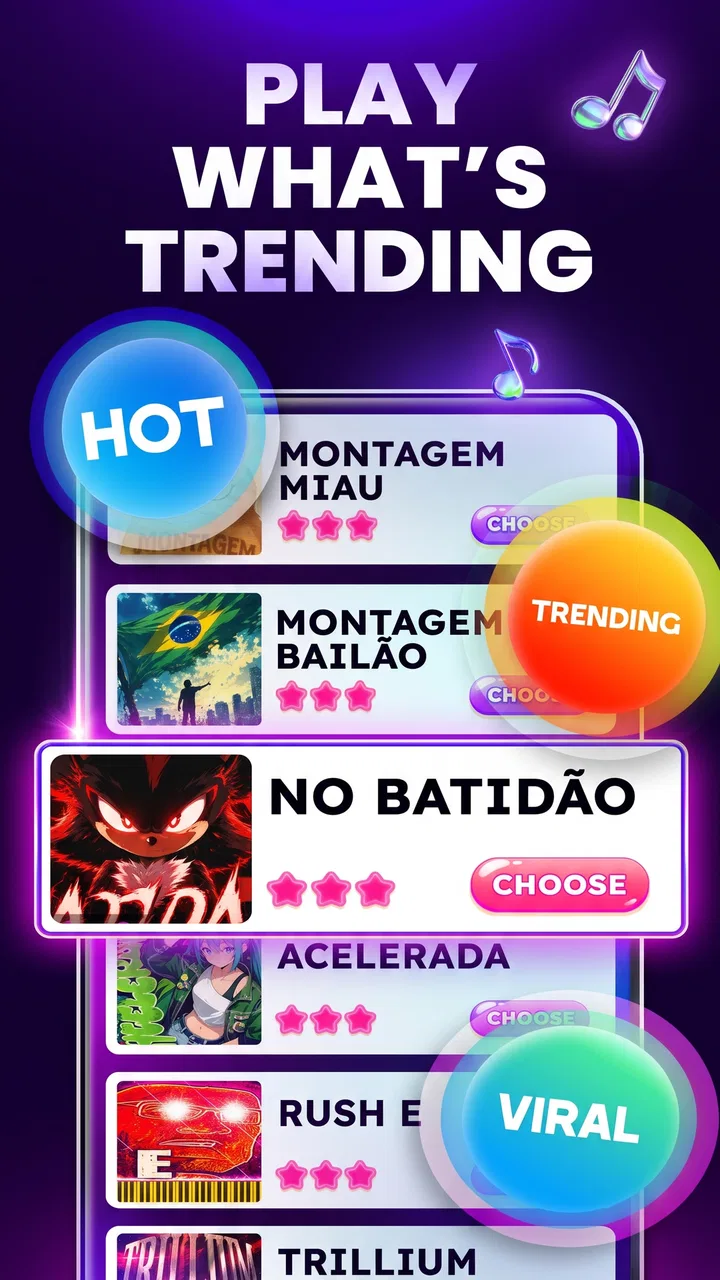
Piano Party: Music Tiles Game is an engaging mobile app that allows users to experience the thrill of playing the piano through a dynamic tile-tapping experience. It features various songs and challenges that increase in difficulty, providing both entertainment and skill development for music lovers of all ages.
02How does Piano Party: Music Tiles Game work?
In Piano Party: Music Tiles Game, players tap on black tiles that scroll down the screen in sync with a song. The goal is to tap accurately and quickly to keep the music playing smoothly. Missing a tile or tapping the wrong area ends the session, challenging players to improve their skills.
03Is Piano Party: Music Tiles Game free to download and play?
Yes, Piano Party: Music Tiles Game is free to download on both Android and iOS platforms. However, it may contain optional in-app purchases for unlocking additional songs or features. Advertisements may also be present, offering users a chance to access premium content or skip ads through purchases.
04Can I play my favorite songs on Piano Party: Music Tiles Game?
The game includes a wide selection of popular music across various genres, but availability depends on licensing agreements. While it might not have every song you desire, frequent updates often add new tracks. Users can sometimes unlock additional content through in-app purchases or by achieving certain in-game milestones.
05Does Piano Party: Music Tiles Game require an internet connection?
Piano Party: Music Tiles Game can be played offline, allowing users to enjoy the game without an internet connection. However, accessing certain features like downloading new songs or participating in online leaderboards requires connectivity. Playing offline might also limit access to some ads that offer rewards.
Pros
- Engaging and intuitive gameplay.
- Wide variety of song choices.
- Visually appealing graphics.
- Smooth and responsive controls.
- Regular updates with new content.
Cons
- Contains in-app purchases.
- Ads may interrupt gameplay.
- Requires internet for some features.
- Limited offline play options.
- High battery consumption.

Piano Magic Notes 7 Music Game
Gallery